
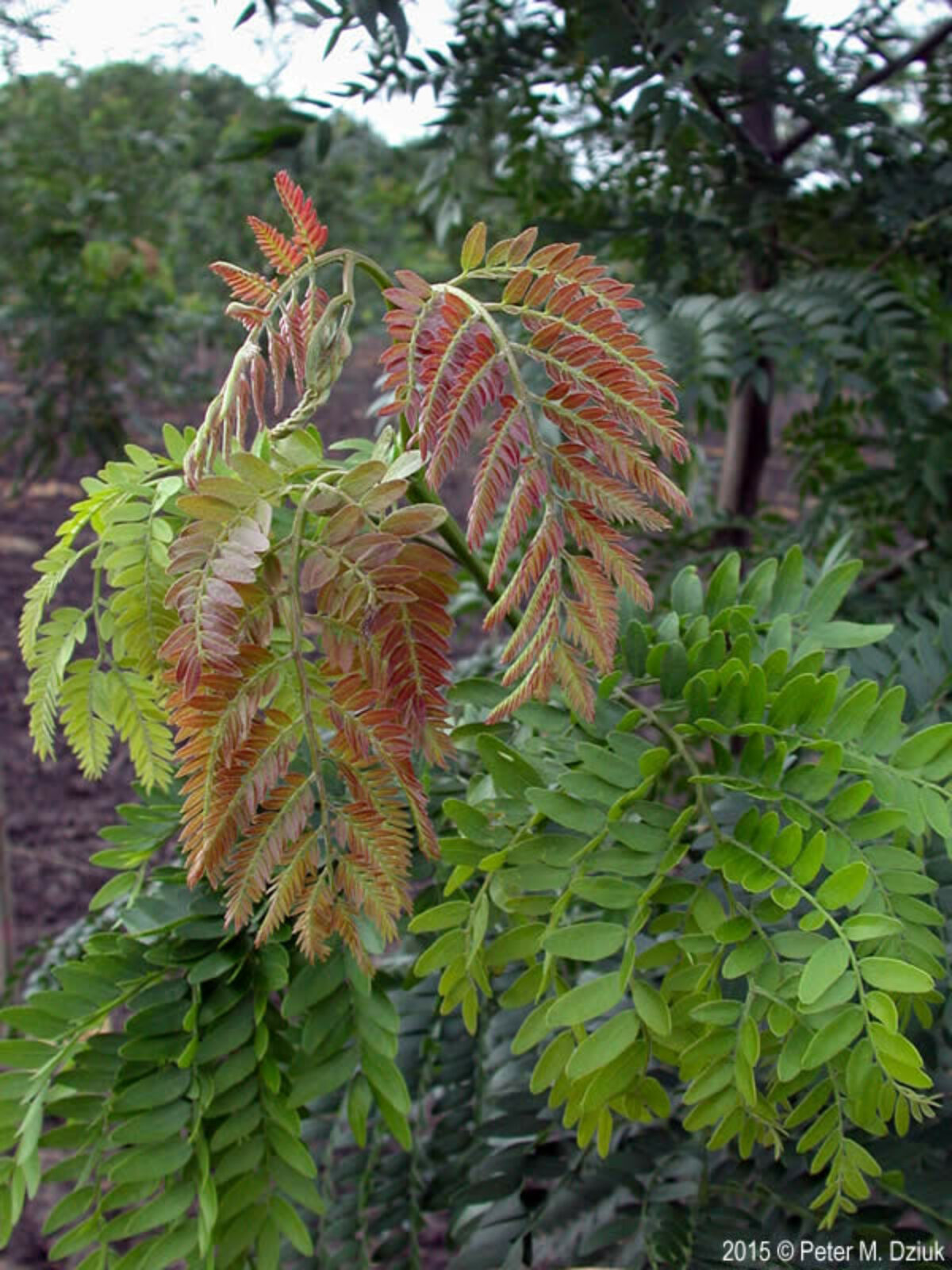
Honey LocustGleditsia triacanthos
Twigs are zig-zagged with thorns at its joints. Between the seeds in the seedpods is a sweet yellowish substance ('honey'). Seedpods are eaten by wildlife. Shouldn't be pruned in wet weather due to risk of infection by nectarial canker. Yellow fall color.
USDA symbol: GLTR
General Information
| Plant Type | Tree |
|---|---|
| Height | 40 to 50 feet |
| Light Exposure | Sun |
| Soil Moisture | Dry |
| Bloom Color | Yellow, Green |
Tolerances
| Flooding / Inundation Tolerance | High |
|---|---|
| General Resilience | 8 |
| Salt Tolerance | Medium |
| Stress Tolerance | Drought Tolerant |
Pollinator Value: Very High
| Bloom Months | May to June |
|---|---|
| Pollinator Benefit | Insect Pollinated, Provides Nectar, Supports Generalists |
Project Planning
| Project Type | Erosion Control, Upland Buffer |
|---|---|
| Coefficient of Conservatism | 1 |
| Herbivore Sensitivity | Medium |
| Lifespan | Perennial |
| Rate of Spread | Medium |
| Soil Stabilization | Deep |
| Vegetative Reproduction | Clonal |
Range
| County | Houston |
|---|---|
| Ecoregion | Driftless Area, Lake Agassiz Plain, North Central Hardwood Forests, Northern Glaciated Plains, Northern Lakes and Forests, Western Cornbelt Plains |
| Approximate Eco Province | Eastern Broadleaf Forest, Laurentian Mixed Forest, Prairie Parkland, Tallgrass Aspen Parklands |