
Fragrant SumacRhus aromatica
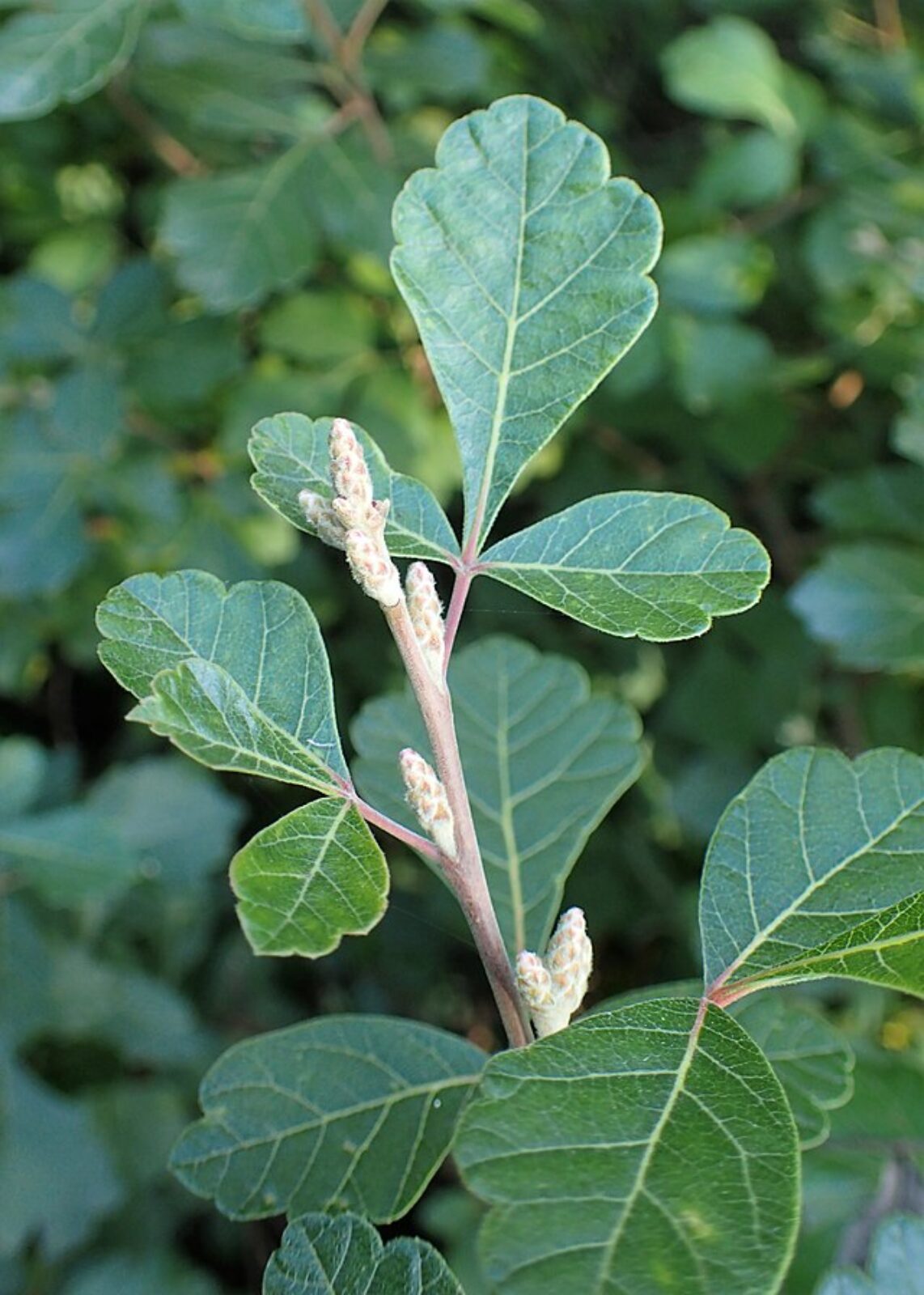
Fragrant Sumac is a colony-forming shrub that produces small yellow flowers in the spring and red berries in the fall. In the fall its foliage turns to vibrant hues of red, orange, and purple. A favorite of pollinators; carpenter bees will tunnel into sumac stems for winter nesting habitat.
USDA symbol: RHAR4
General Information
| Plant Type | Shrub |
|---|---|
| Height | 3 to 6 feet |
| Light Exposure | Sun, Part Sun, Shade |
| Soil Moisture | Dry, Medium |
| Bloom Color | Yellow |
Tolerances
| Flooding / Inundation Tolerance | Moderate |
|---|---|
| General Resilience | 10 |
| Salt Tolerance | Low |
| Stress Tolerance | Drought Tolerant |
Pollinator Value: Very High
| Bloom Months | April to June |
|---|---|
| Larval Host of | Bees |
| Specific Pollinators Hosted | Andrena brevipalpis, Colletes nudus |
| Pollinator Benefit | Insect Pollinated, Provides Nectar, Stem Nesting, Supports Generalists |
Project Planning
| Project Type | Erosion Control, Restoration |
|---|---|
| Coefficient of Conservatism | 7 |
| Herbivore Sensitivity | Low |
| Lifespan | Perennial |
| Rate of Spread | Medium |
| Soil Stabilization | Deep |
| Vegetative Reproduction | Clonal |
Range
| County | Anoka, Carver, Chisago, Cottonwood, Dakota, Goodhue, Hennepin, Ramsey, Washington, Winona, Wright |
|---|---|
| Ecoregion | Driftless Area, North Central Hardwood Forests, Northern Lakes and Forests, Western Cornbelt Plains |
| Approximate Eco Province | Eastern Broadleaf Forest, Laurentian Mixed Forest, Prairie Parkland |