
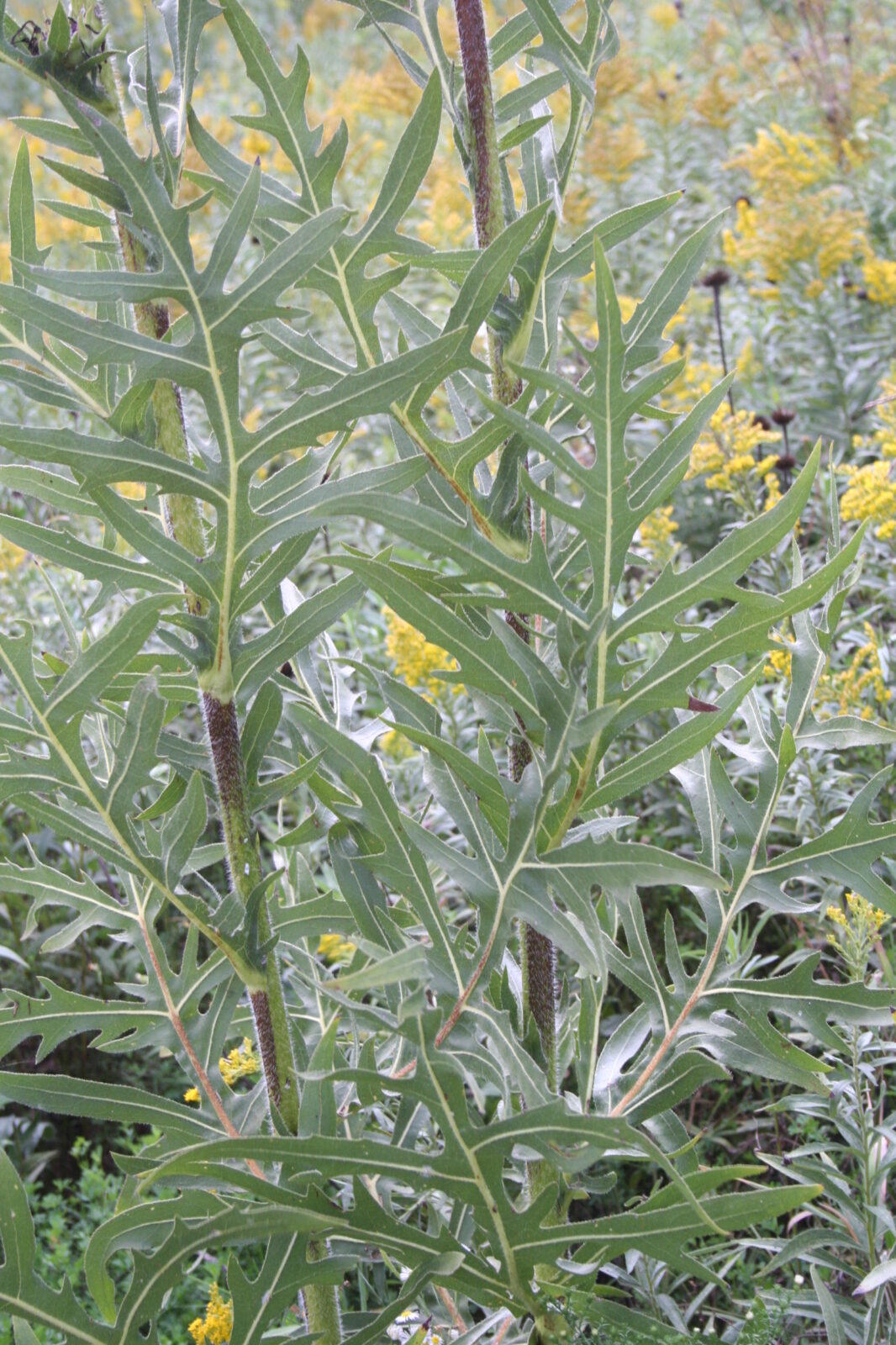
Compass PlantSilphium laciniatum
Coarse, perennial native herb to a mature height of up to 10'. This species has been used in buffer and slope stabilization. It has also had success in the restorations of mesic-to-wet prairies and the edges of rainwater gardens.
USDA symbol: SILA3
General Information
| Plant Type | Forb |
|---|---|
| Height | 6 to 9 feet |
| Light Exposure | Sun |
| Soil Moisture | Dry |
| Bloom Color | Yellow |
Tolerances
| Flooding / Inundation Tolerance | Low |
|---|---|
| General Resilience | 8 |
| Salt Tolerance | Low |
| Stress Tolerance | General Disturbance |
Pollinator Value: Very High
| Bloom Months | July to August |
|---|---|
| Larval Host of | Moths |
| Specific Pollinators Hosted | Eucosma giganteana, Papaipema silphii |
| Pollinator Benefit | Insect Pollinated, Provides Nectar, Stem Nesting, Supports Generalists |
Project Planning
| Project Type | Erosion Control, Rain Garden, Restoration |
|---|---|
| Coefficient of Conservatism | 8 |
| Herbivore Sensitivity | Medium |
| Lifespan | Perennial |
| Rate of Spread | Slow |
| Soil Stabilization | Deep |
| Vegetative Reproduction | Absent |
Range
| County | Blue Earth, Dakota, Dodge, Faribault, Fillmore, Freeborn, Goodhue, Houston, Jackson, Lincoln, Martin, Mower, Murray, Nobles, Olmsted, Pipestone, Ramsey, Rice, Rock, Steele, Wabasha, Waseca, Washington, Winona |
|---|---|
| Ecoregion | Driftless Area, North Central Hardwood Forests, Northern Glaciated Plains, Northern Lakes and Forests, Western Cornbelt Plains |
| Approximate Eco Province | Eastern Broadleaf Forest, Laurentian Mixed Forest, Prairie Parkland |