
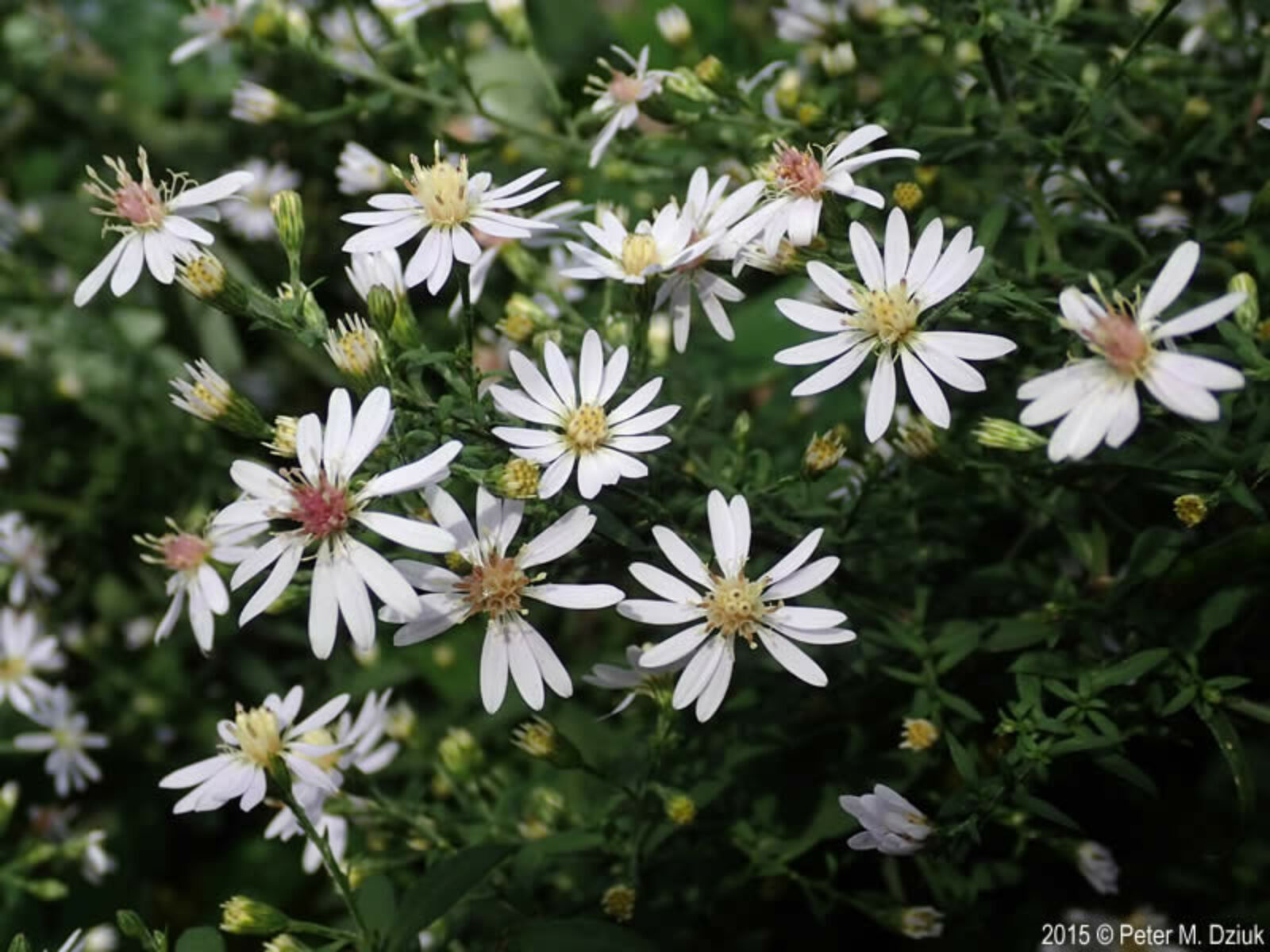
Blue Wood AsterSymphyotrichum cordifolium
Blue Wood or Heart-leaved Aster is a good food source for pollinators in the late summer and fall. It does best in partial shade but can tolerate a range of growing conditions.
USDA symbol: SYCO4
General Information
| Plant Type | Forb |
|---|---|
| Height | 3 feet |
| Light Exposure | Part Sun, Shade |
| Soil Moisture | Dry |
| Bloom Color | Blue |
Tolerances
| Flooding / Inundation Tolerance | Moderate |
|---|---|
| General Resilience | 7 |
| Salt Tolerance | None |
| Stress Tolerance | Drought Tolerant, Fire Tolerant |
Pollinator Value: Very High
| Bloom Months | September to October |
|---|---|
| Larval Host of | Bees, Moths |
| Specific Pollinators Hosted | Acrocercops astericola, Numerous bee species |
| Pollinator Benefit | Insect Pollinated, Provides Nectar, Stem Nesting, Supports Generalists |
Project Planning
| Project Type | Shoreline Buffer |
|---|---|
| Coefficient of Conservatism | 6 |
| Herbivore Sensitivity | Low |
| Lifespan | Perennial |
| Rate of Spread | Medium |
| Soil Stabilization | Shallow |
| Vegetative Reproduction | Clonal |
Range
| County | Blue Earth, Brown, Carver, Chisago, Cottonwood, Dakota, Faribault, Fillmore, Goodhue, Hennepin, Le Sueur, Lincoln, Mille Lacs, Murray, Olmsted, Pine, Ramsey, Redwood, Renville, Rice, Sibley, Wabasha, Waseca, Washington, Watonwan |
|---|---|
| Ecoregion | Driftless Area, Lake Agassiz Plain, North Central Hardwood Forests, Northern Glaciated Plains, Northern Lakes and Forests, Northern Minnesota Wetlands, Western Cornbelt Plains |
| Approximate Eco Province | Eastern Broadleaf Forest, Laurentian Mixed Forest, Prairie Parkland, Tallgrass Aspen Parklands |