
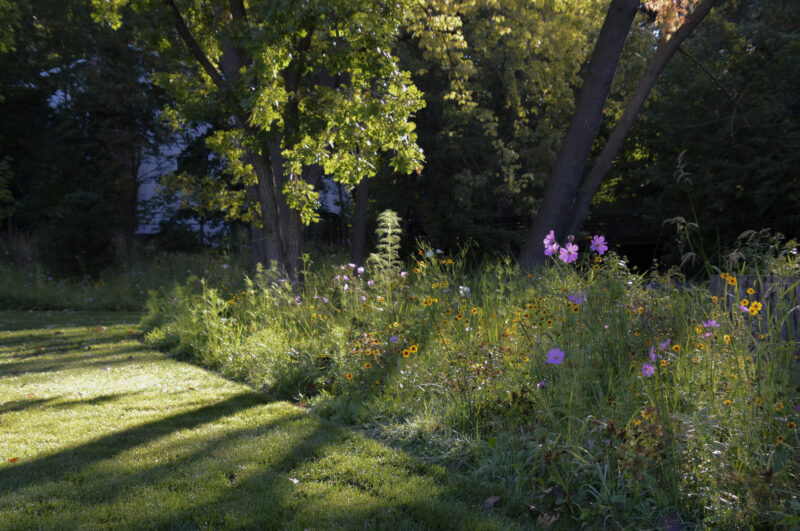
Caring for water, soil, and pollinators starts right at home. For many, that includes rethinking how we manage our lawns. Organic lawn care is one approach that’s growing in popularity—especially for those looking for sustainable options that reduce chemical inputs and complement nearby native plantings.
We connected with Shay Lunseth of Organic Lawns by LUNSETH, a Blue Thumb partner and sponsor, to talk about what organic lawn care really means, how it complements native plantings, and what simple practices homeowners can adopt this season.
Blue Thumb: What is organic lawn care?
Shay Lunseth: At its simplest, organic lawn care is an alternative to conventional, chemically-based lawn care. It’s for people who want to eliminate synthetic chemicals from their yard and instead support their lawn using natural inputs and practices.
We use 100% organic fertilizers, including non-GMO corn gluten meal. The only product we use that isn’t strictly organic is a chelated iron for post-emergent weed control, but it’s a low-toxicity option. Another part of what we do is education—things like proper mowing, aeration, and overseeding—to help lawns thrive naturally.
Blue Thumb: Why go organic—especially if you already have native plantings?
Shay Lunseth: Organic lawn care can be a great complement to native plantings and pollinator habitat. Sometimes people think going organic means having a wild or unkempt lawn, but that’s not the case. We often serve households where one person wants a pollinator-friendly yard and another prefers a more traditional, green lawn. Organic care can help bridge that gap.
We aim for a lawn that’s about 90–95% weed-free, while still allowing for some diversity. A small percentage of weeds is actually beneficial and supports biodiversity.
More importantly, organic lawn care focuses on soil health. By encouraging healthy soil biology, your lawn becomes more resilient—it needs less water and fertilizer, and it’s better able to withstand drought, heat, pests, and disease. A healthy lawn can even crowd out weeds naturally.
People typically come to organic lawn care from two directions: either they haven’t done much lawn care and want to improve their yard, or they’ve used conventional treatments and want to move away from chemicals. We can support both.
Blue Thumb: What are some best practices for organic lawn care in spring and summer?
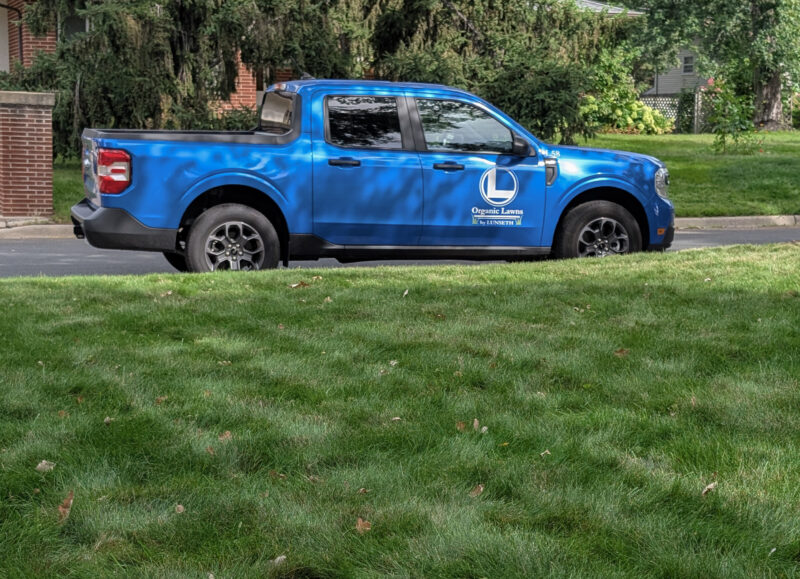
Shay Lunseth: There are a few simple things homeowners can do that make a big difference:
- Mow high and mow less. Keep your grass around 3.5 to 4 inches tall. Taller grass means deeper roots, which helps protectthe plant and makes it more resilient to stress. Think of it as “slow-mow summer”—similar to No Mow May, but extended into the growing season.
- Water deeply and infrequently. If you water, do it all at once—about one inch per week. You can measure this with something simple like a tuna can or rain gauge. Deep watering encourages strong root systems. It’s also important to time watering wisely. Water before a hot, dry stretch to help your lawn withstand stress. If you choose not to water, grass will naturally go dormant and bounce back when conditions improve.
- Leave grass clippings on the lawn. Recycling clippings returns nutrients to the soil and reduces the need for additional inputs.
These practices are low-cost, easy to implement, and go a long way toward building a healthier lawn ecosystem.
Blue Thumb: How does Organic Lawns by LUNSETH support customers?
Shay Lunseth: Education is a big part of what we do. Customers can join monthly webinars where we talk about seasonal topics—like current weather conditions, emerging weeds, or new challenges—and answer questions.
We also design our program to create lower-maintenance lawns. For example, we support fine fescue grasses, which require less water, fertilizer, and sunlight. The goal is to build a system that needs fewer inputs overall.
We’re always looking at the lawn holistically—how mowing, fertilizing, and soil health all work together.
Blue Thumb: What’s new this season?
Shay Lunseth: We’ve recently added irrigation services. We can help homeowners start up or troubleshoot their systems and set them to water appropriately—usually meaning keeping systems off unless they’re truly needed.
When irrigation is used, we recommend watering deeply, infrequently, and in the morning.
We’re also continuing our webinar series and expanding topics based on what customers are seeing—everything from weather challenges to emerging issues like jumping worms.
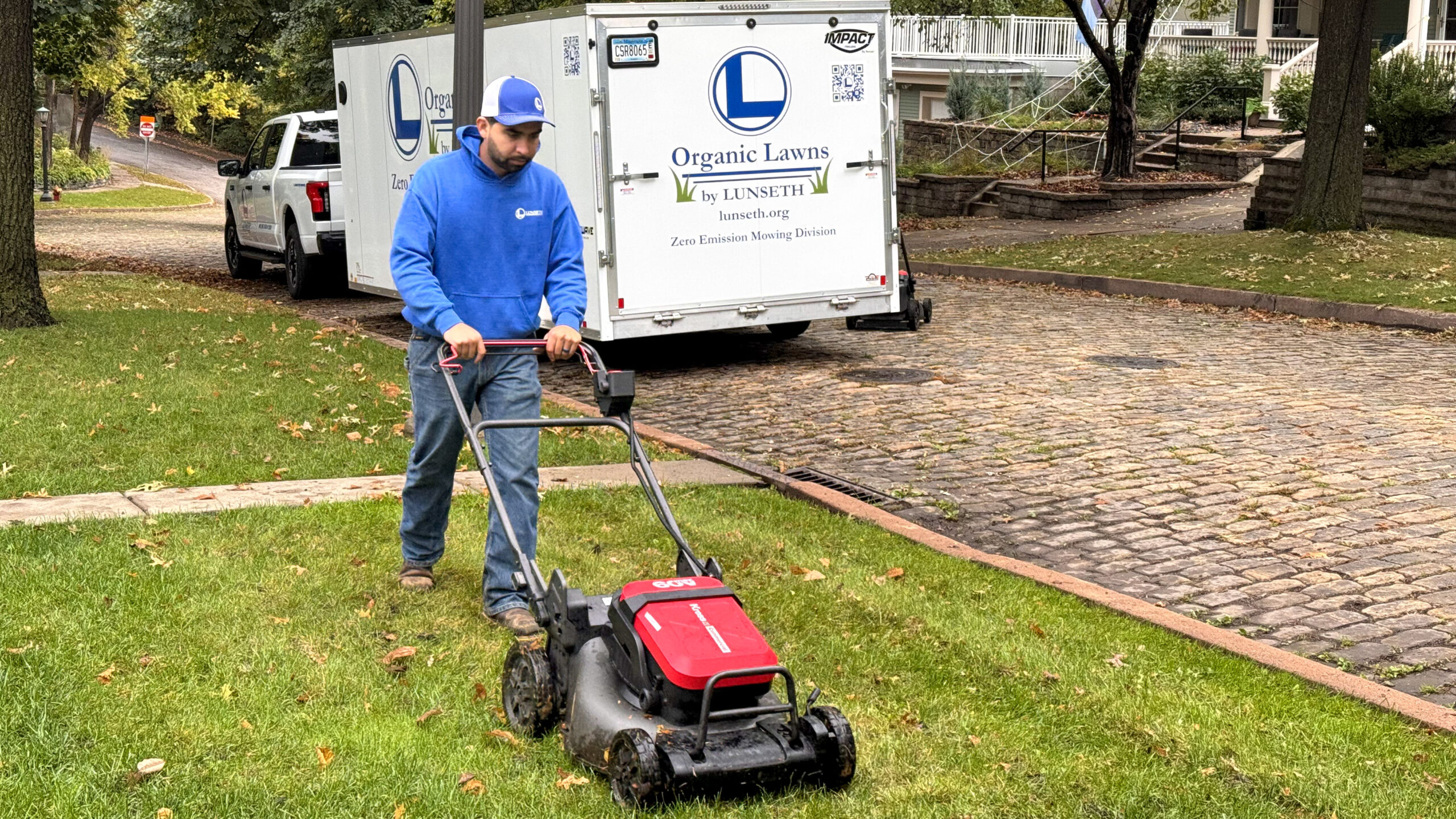 Blue Thumb: Can you share more about your electric mowing services?
Shay Lunseth: We launched electric mowing last year, and the response has been really positive. People love how quiet it is. It changes the feel of a neighborhood—you can hear birds and kids playing instead of constant engine noise.
Our electric mowing crews use electric trucks, mowers, and blowers, so the entire system avoids fossil fuels. We’re starting with a smaller service area and hope to expand as demand grows.
Reducing noise pollution is a big part of this, too—it benefits both people and wildlife.
Blue Thumb: Anything else you’d like to share?
Shay Lunseth: We also offer landscaping services, including both hardscapes and softscapes. Our team is working toward fully organic practices and takes a holistic approach—thinking about soil health, pollinators, and how lawns and native plantings can work together.
We’re excited to help create outdoor spaces that are both beautiful and environmentally supportive.
 Looking Ahead
Organic lawn care offers a practical way to reduce chemical use while still maintaining a functional yard—and it pairs naturally with native plantings and pollinator habitat. Whether you’re just getting started or looking to transition away from conventional lawn care, small changes can have a big impact.
Related Resources:
- Organic Lawns by LUNSETH website
- Request a free quote from Organic Lawns by LUNSETH (serving the Twin Cities Metro Area and Rochester area)
- Blue Thumb Turf Alternatives information
- Blue Thumb Soil Health 101 resource